Agro Pop Art
From cultivation to eternity.
Giuseppe Troiani is an entrepreneur and the creator of Agro Pop Art, an artistic project born from the encounter between agriculture, craftsmanship and sculpture. It grows out of thirty-five years of experience in the artichoke supply chain and in its manual processing, developed also through his work in Campo de' Fiori, Rome.
01
From genetic selection to cultivation
Throughout his professional career, Troiani says he has worked alongside geneticists specialized in the recovery and enhancement of ancient varieties of Romanesco artichoke. His experience includes varietal selection and collaboration in breeding programs, also through the selection of male-sterile plants for the development of new varieties.
His research extends to identifying the regions and growing conditions best suited to anticipating or delaying the harvest. Troiani selects the growers he works with and supports them in decisions concerning mulching, planting density and fertilization, according to soil characteristics and the desired quality of the final product.
In his vision, the form that will become sculpture begins to be defined through these choices, long before the foundry.
02
Harvesting and chiselling
Attention to the raw material continues in the choice of harvest time, the way the stem is cut, the arrangement of the artichokes in crates and their storage. Among the precautions used is protection with leaves, limiting exposure to air and dehydration before processing and delivery.
Manual processing is the heart of the journey. Troiani describes it as a form of “chiselling”: the artichoke is worked bract by bract, progressively removing the harder parts while preserving its heart. The gesture seeks both tenderness and harmony of form.
This skill, refined through the handling of a very large number of specimens, is the bridge between his work in the food supply chain and his sculptural research.
03
Restaurants, cuisine and responsibility
Troiani also applies selection criteria to the restaurateurs who receive his products. He considers the ability to handle and cook the artichoke essential in order to preserve the value created in all the previous stages.
In his entrepreneurial vision, choosing the right clients is part of the company's responsibility: the commercial relationship must allow the quality and identity of the product to remain recognizable.
His work at La Carcioferia Troiani, in Largo del Pallaro 1 in Rome, extends this research into gastronomy. Troiani describes a preparation based on careful evaporation of the vegetable's water followed by browning in 100% Italian extra-virgin olive oil, accompanied by Sulmona garlic.
Cuisine and sculpture become two different developments of the same knowledge of matter.
04
The birth of Agro Pop Art
Troiani defines Agro Pop Art as an artistic expression founded on continuity between plant selection, cultivation, manual processing and sculptural transformation.
Specimens destined for the foundry are chosen among the main Romanesco artichoke heads for their structural and formal characteristics. Troiani describes the selectivity of this research with the image of an artichoke chosen “from one million”: a way of expressing the rarity of the balance he seeks between proportions, arrangement of the bracts and shape of the stem.
The cultivated artichoke, itself the result of a long history of human selection from the wild cardoon, becomes the subject of a further intervention. Chiselling interprets its structure while preserving the recognizability of its vegetal form.
05
From the living specimen to metal
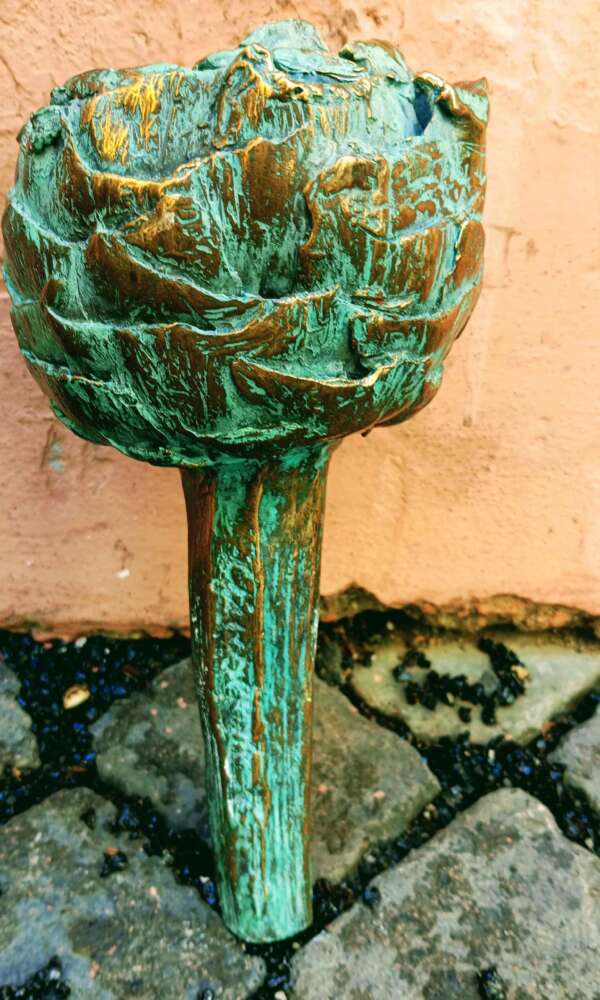
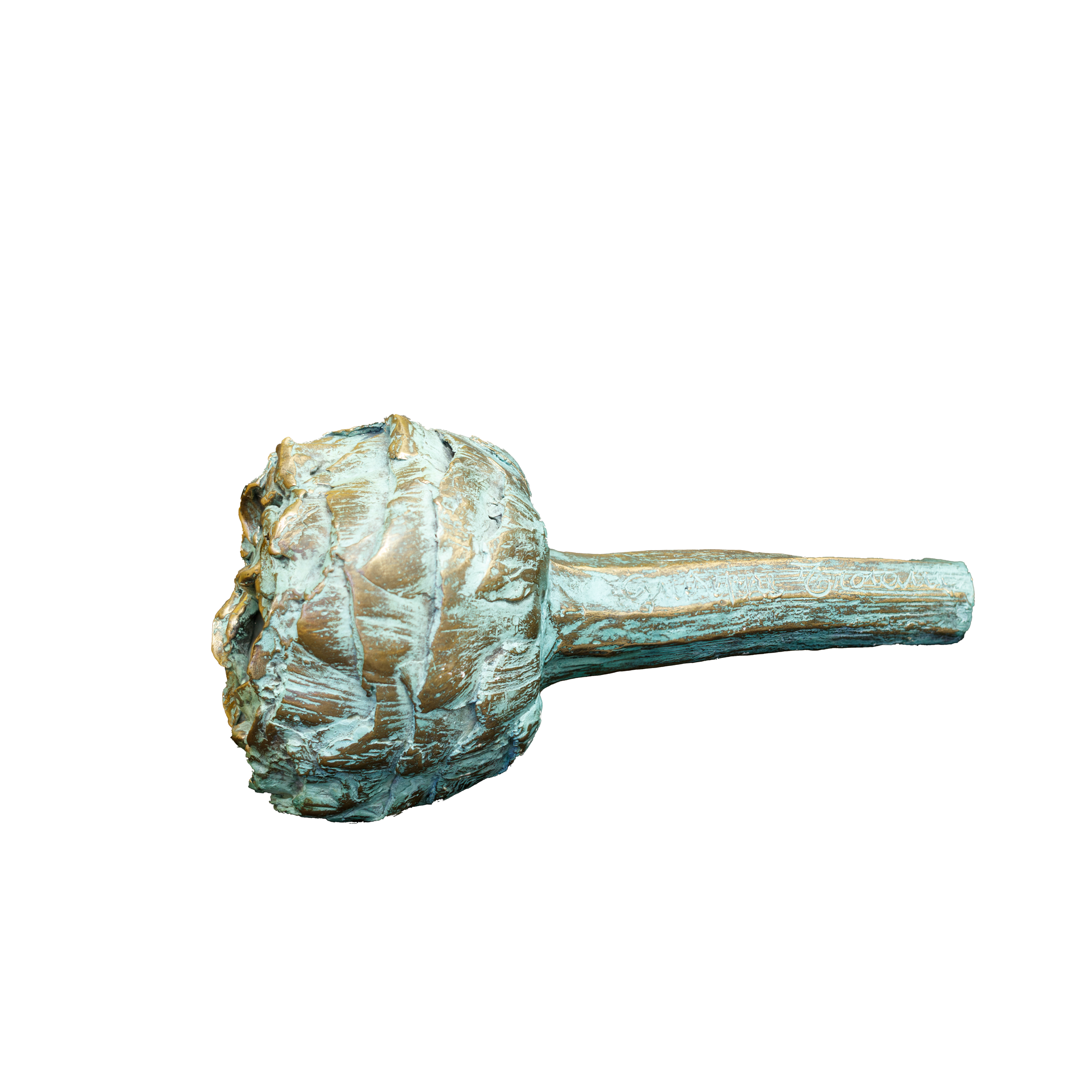
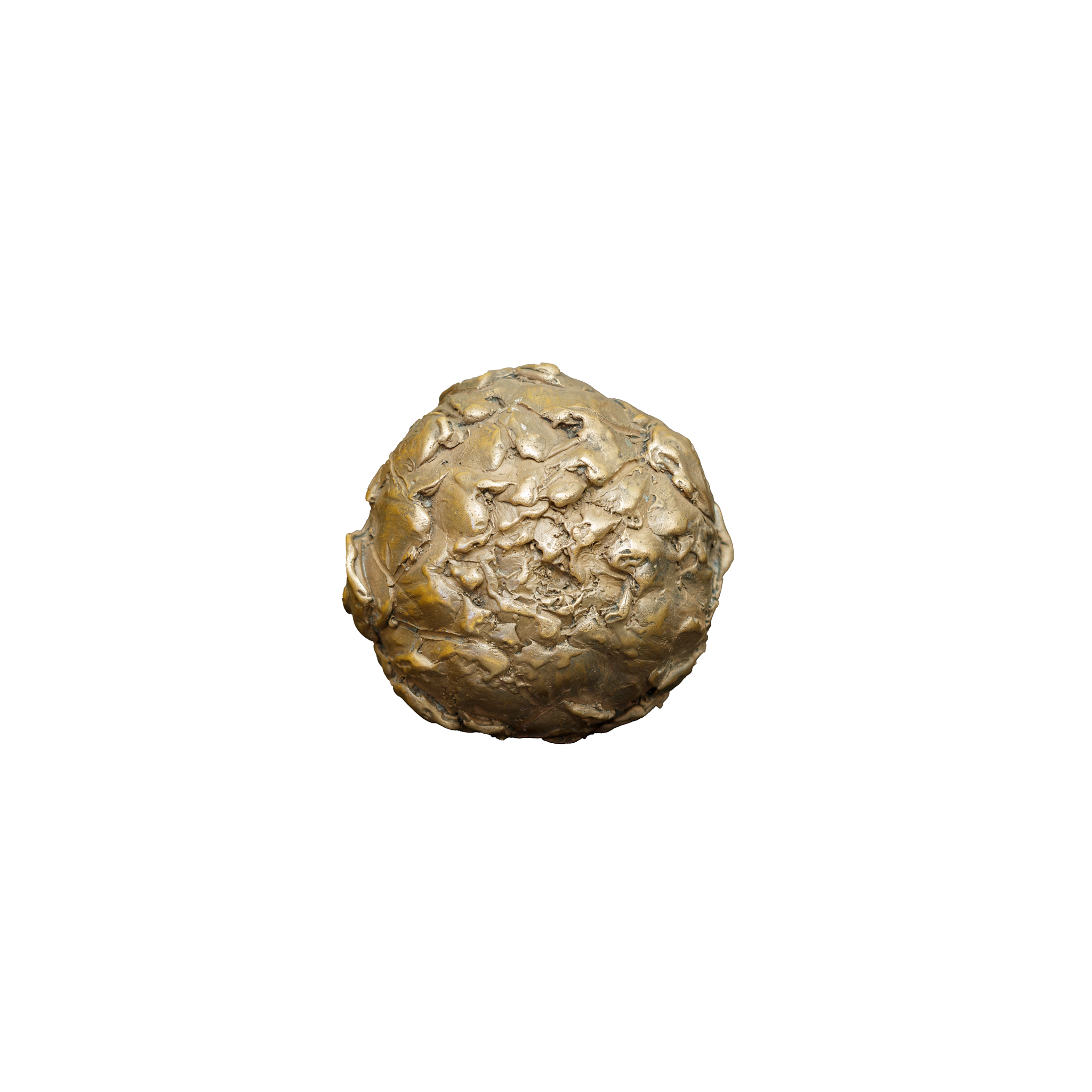
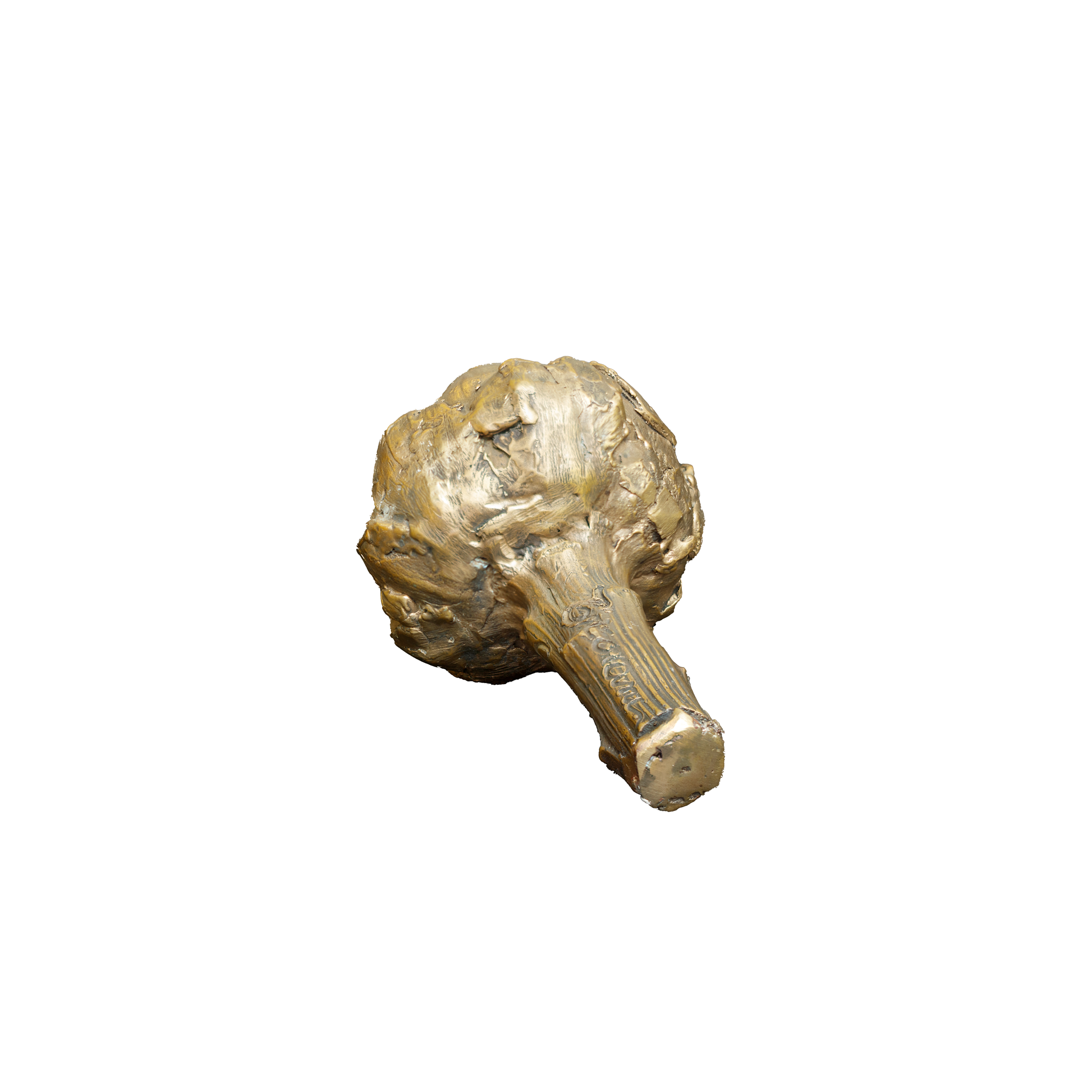
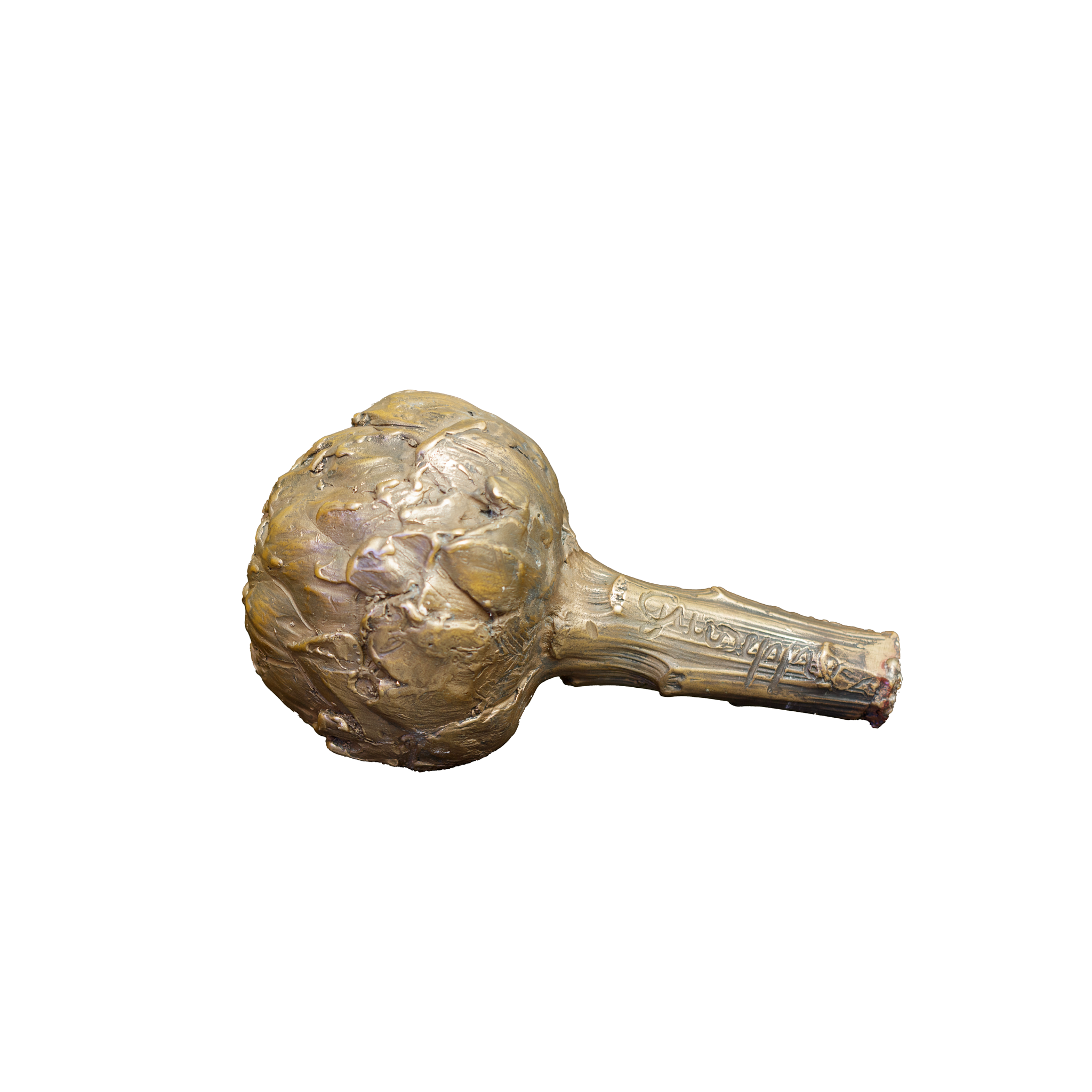
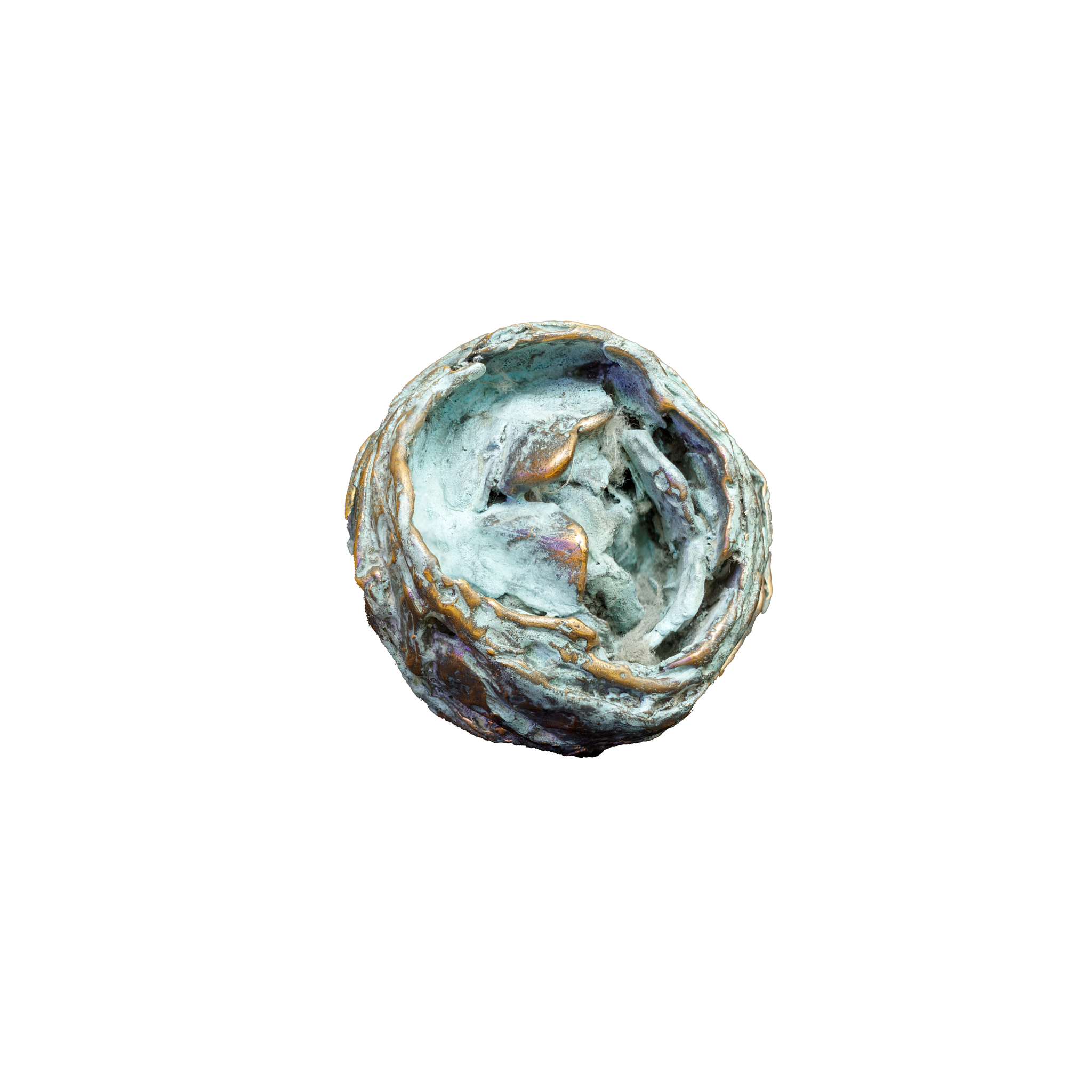
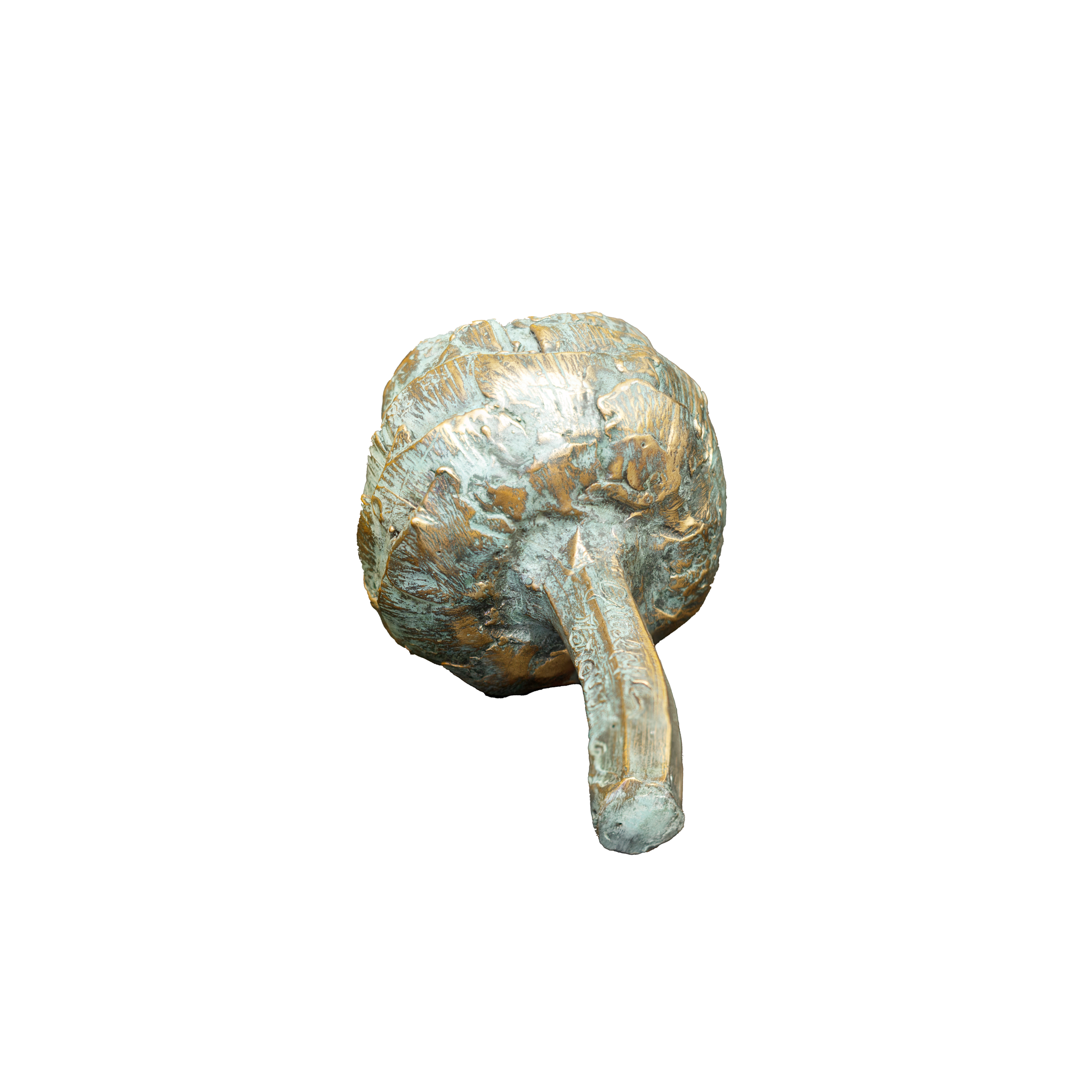
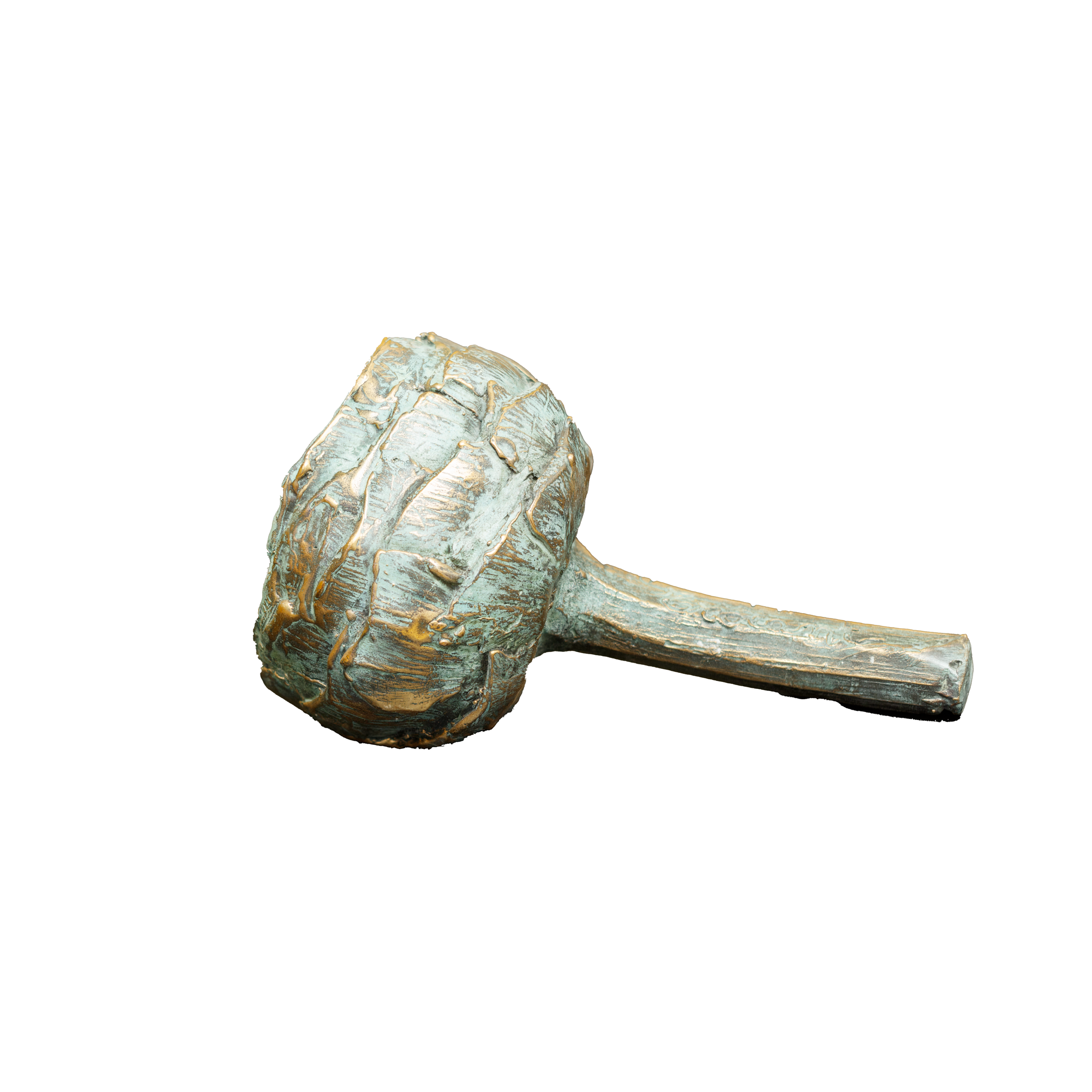
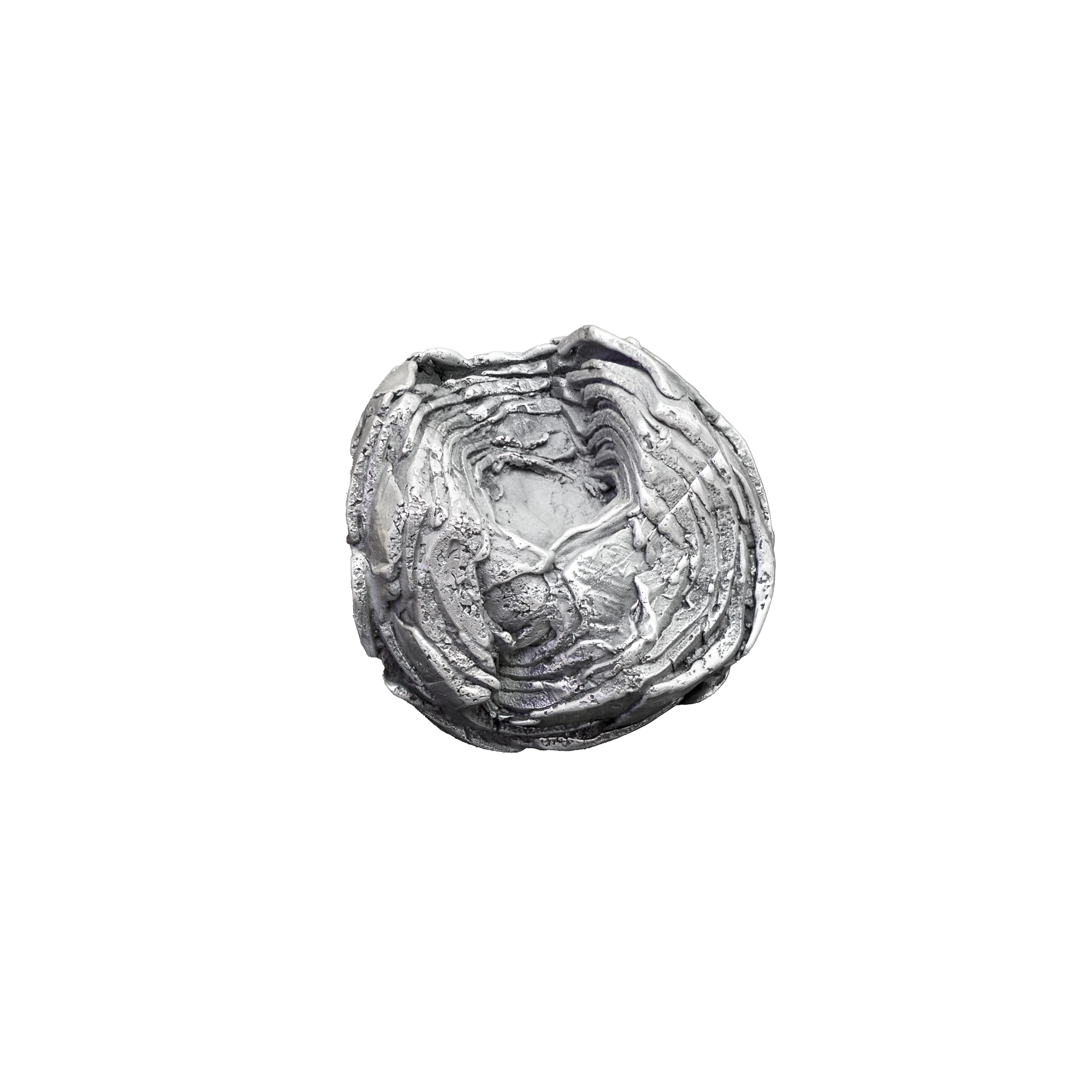
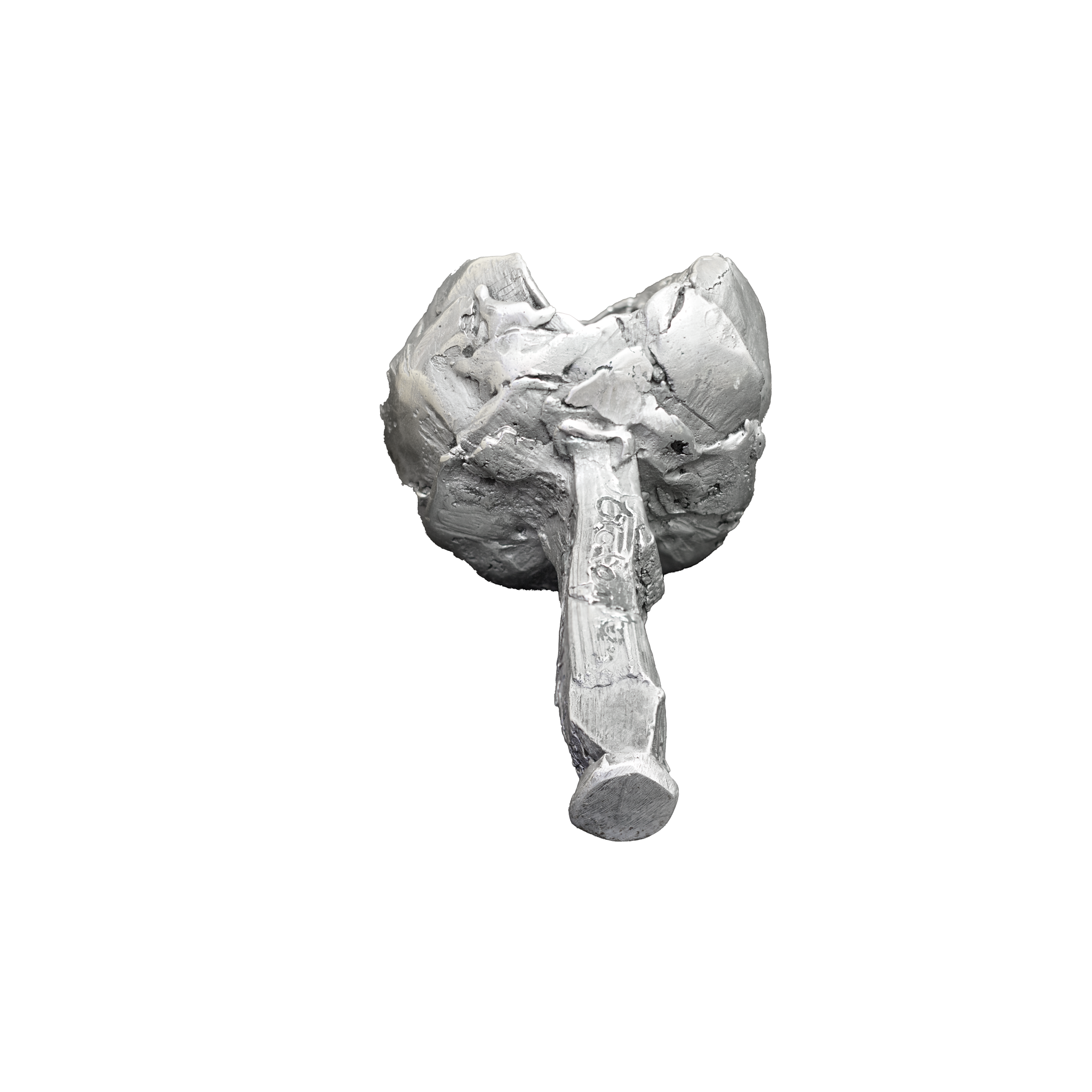
Once the manual work is complete, the selected specimen is entrusted to the foundry, where its form is reproduced in metal through the lost-wax casting process. The sculpture retains the arrangement of the bracts, the profile of the heart and the characteristics impressed by hand.
For Troiani, the foundry is the final phase of a process whose value lies in the entire journey: from knowledge of the plant to the choice and preparation of the specimen.
The artichoke passes from a perishable material to a form capable of surviving beyond the life of the plant and its author: “almost eternal.”
06
The idea of “almost eternal”
A central theme of Agro Pop Art is the relationship between the perishability of plant matter and the duration of sculpture. The artichoke, destined for consumption or natural deterioration, is transformed into a form capable of enduring beyond the life of the plant and its maker.
Troiani defines this condition as “almost eternal”, acknowledging that no material and no work can truly guarantee eternity. The expression describes the possibility of entrusting the future with evidence of human work without denying its temporal limits.
Bronze preserves the shape of a transient material and, with it, the memory of the knowledge and gestures that accompanied it. Agro Pop Art thus brings together Giuseppe Troiani's agricultural and artisanal experience in a project that takes the artichoke as both sculptural subject and testimony to the relationship between nature, work and time.